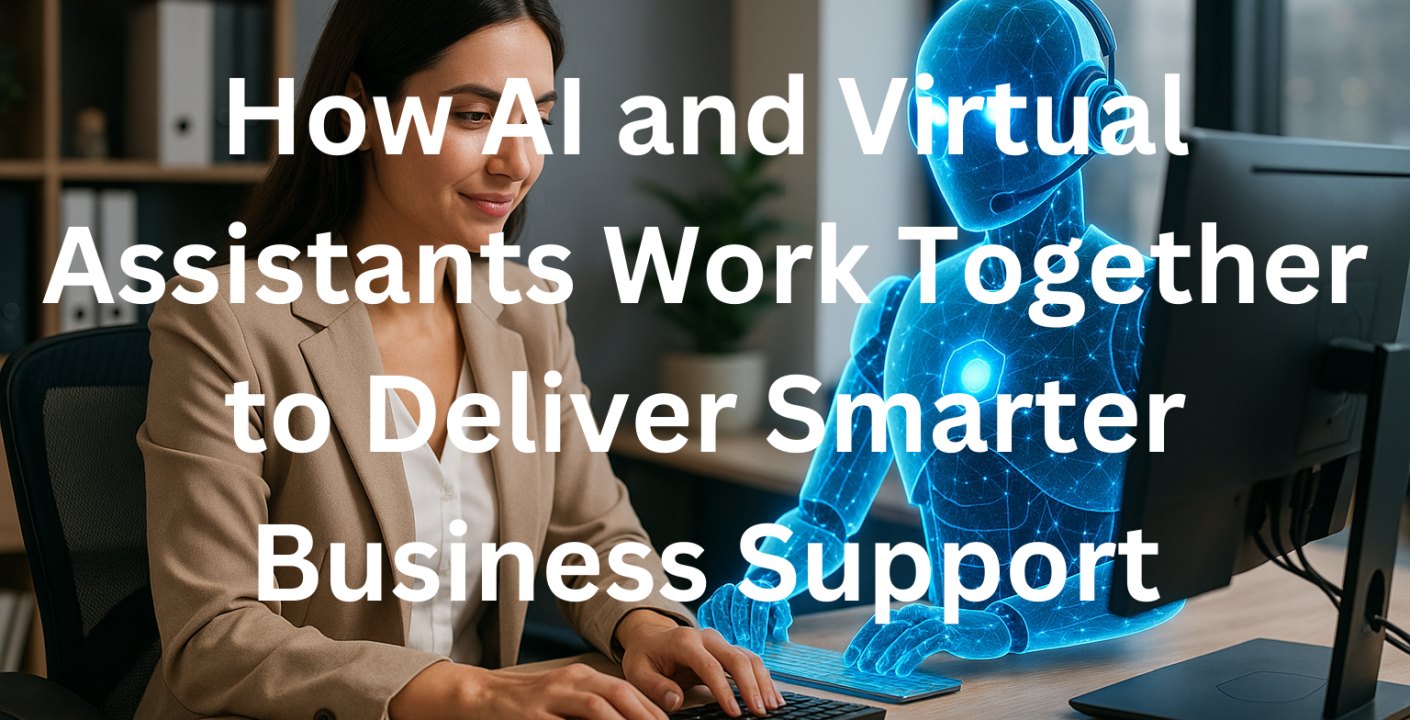
In today’s hyper‑competitive marketplace, executives and business owners are under constant pressure to do more with less. The rise of artificial intelligence (AI) and virtual assistants (VAs) offers a compelling answer: a hybrid solution that blends machine‑learning insight with human‑like interaction. When AI powers a virtual assistant, routine tasks are automated, data is interpreted in real time, and decision‑makers receive actionable recommendations instantly. This article explains how the two technologies complement each other, outlines the concrete benefits for professional teams, and provides a step‑by‑step roadmap for integrating AI‑enabled VAs into your organization.
1. The Evolution of Business Support
Traditional business support relied heavily on manual processes, paper forms, and siloed departments. Over the past decade, three major trends have reshaped the landscape:
- Automation of Repetitive Tasks – Robotic Process Automation (RPA) eliminated rule‑based workflows.
- Data‑Driven Decision Making – Business Intelligence (BI) tools turned raw data into dashboards.
- Conversational Interfaces – Chatbots and voice assistants introduced a human‑centric front end.
AI and virtual assistants represent the convergence of these trends. AI supplies the analytical engine, while the VA provides the conversational layer that employees and customers interact with daily.
2. What Is AI and How Does It Power Virtual Assistants?
Artificial intelligence encompasses several sub‑technologies that are directly relevant to virtual assistants:
| AI Component | Role in a VA | Example |
|---|---|---|
| Natural Language Processing (NLP) | Enables the VA to understand written or spoken queries. | Detecting intent in an email request. |
| Machine Learning (ML) | Continuously improves response accuracy based on past interactions. | Predicting the best time to schedule a meeting. |
| Computer Vision | Interprets images or scanned documents. | Extracting data from receipts. |
| Predictive Analytics | Generates forward‑looking insights for proactive support. | Flagging overdue invoices before they become critical. |
When these capabilities are embedded in a virtual assistant, the system can not only execute commands but also anticipate needs, prioritize actions, and learn from each interaction.
3. Key Benefits of Combining AI with Virtual Assistants
- Instant Access to Information – Employees can ask a VA for sales figures, project status, or regulatory updates and receive a concise answer within seconds.
- Reduced Cognitive Load – By handling email triage, calendar conflicts, and travel bookings, the VA frees executives to focus on strategy.
- Scalable Customer Service – AI‑driven VAs field routine inquiries 24/7, escalating only complex issues to human agents.
- Cost Efficiency – Automating high‑volume tasks cuts labor expenses while maintaining service quality.
- Improved Accuracy – Machine‑learned validation checks minimize human error in data entry and reporting.
- Actionable Insights – Predictive models surface trends (e.g., churn risk) before they impact the bottom line.
These advantages translate directly into higher productivity, better customer satisfaction, and a stronger competitive position.
4. Real‑World Use Cases for Professionals and Business Owners
| Use Case | How the AI‑VA Helps |
|---|---|
| Customer Support | Answers FAQs, tracks order status, and routes unresolved tickets to the appropriate department. |
| Calendar & Email Management | Schedules meetings, resolves conflicts, drafts replies, and sets reminders based on priority. |
| Data Analysis & Reporting | Pulls KPI data from ERP systems, generates visual reports, and highlights anomalies. |
| Sales & Lead Generation | Qualifies inbound leads, enriches contact records, and schedules discovery calls. |
| HR & Recruitment | Screens resumes using keyword matching, coordinates interview panels, and sends onboarding documents. |
| Finance & Procurement | Processes invoices, validates purchase orders, and flags duplicate payments. |
Each scenario demonstrates how the AI layer interprets raw inputs while the VA delivers a human‑like response, creating a seamless experience for both internal staff and external clients.
5. Implementing AI‑Enabled Virtual Assistants in Your Organization
Step 1 – Assess Business Needs
Map out high‑frequency, low‑value tasks that drain time. Prioritize those with clear data sources and measurable outcomes.
Step 2 – Choose the Right Platform
Select a solution that supports the AI capabilities you require (NLP, ML, integration APIs) and aligns with your existing tech stack (CRM, ERP, cloud services).
Step 3 – Integrate Systems
Connect the VA to core applications via secure APIs. Ensure data flow complies with GDPR and other privacy regulations.
Step 4 – Train the Assistant
Feed domain‑specific terminology, common intents, and preferred response styles. Use supervised learning to fine‑tune accuracy.
Step 5 – Pilot and Iterate
Launch with a limited user group, collect feedback, and adjust workflows. Measure key metrics such as task completion time, error rate, and user satisfaction.
Step 6 – Scale Across Departments
Roll out the refined VA to additional teams, expanding its skill set gradually. Continue monitoring performance and updating the AI model.
6. Overcoming Common Challenges
| Challenge | Mitigation Strategy |
|---|---|
| Data Silos | Deploy a unified data lake or middleware to centralize information. |
| User Adoption | Offer hands‑on training, showcase quick wins, and involve champions from each department. |
| Security Concerns | Implement role‑based access controls, encrypt data in transit, and conduct regular audits. |
| Model Drift | Schedule periodic retraining of machine‑learning models with fresh data. |
| Complex Queries | Design a graceful fallback to human agents for edge cases. |
Addressing these obstacles early ensures a smoother transition and maximizes ROI.
7. Future Trends – What’s Next for AI and Virtual Assistants?
- Multimodal Interaction – Combining voice, text, and visual inputs for richer conversations.
- Hyper‑Personalization – AI will tailor responses based on individual user behavior and preferences.
- Edge Computing – Processing data locally on devices to reduce latency and enhance privacy.
- Autonomous Workflow Orchestration – VAs will not only execute tasks but also dynamically reconfigure entire business processes.
Staying ahead of these developments positions your company as an innovator rather than a follower.
Conclusion – Hire a Virtual Personal Assistant
The synergy between AI and virtual assistants is no longer a futuristic concept; it is a proven catalyst for smarter, faster business support. By automating routine work, delivering real‑time insights, and freeing leaders to focus on strategic growth, an AI‑powered VA becomes an indispensable member of your team.
Ready to experience the difference? Hire a Virtual Personal Assistant today and let us design a customized solution that fits your unique workflow.
Contact us now: https://cicoorsourcing.com/contact/